If you are researching bathroom waterproofing Singapore, you are usually in one of two situations: you are renovating and want the wet areas done correctly, or you already have a leak showing up in the unit below. Both come down to the same thing — a waterproofing membrane that is intact, correctly detailed, and tested before tiles go back on.
A bathroom looks finished once the tiles are laid, but the part that actually keeps water out sits hidden under the screed. If that membrane fails around the floor trap, pipe penetrations, or the wall-floor junction, water seeps into the slab and reappears as ceiling stains, peeling paint, or damp patches downstairs.
Signs your bathroom needs re-waterproofing
Watch for recurring ceiling stains in the room below the bathroom, a musty smell that does not clear, efflorescence (white powdery deposits) on the ceiling or walls, tiles that sound hollow when tapped, or grout and silicone that keep cracking at the edges. Constant dampness near the floor trap or shower area is another common warning.
A single stain does not always mean full failure, but if patch repairs keep coming back, the membrane underneath is usually the real problem.
Membrane options and what they cover
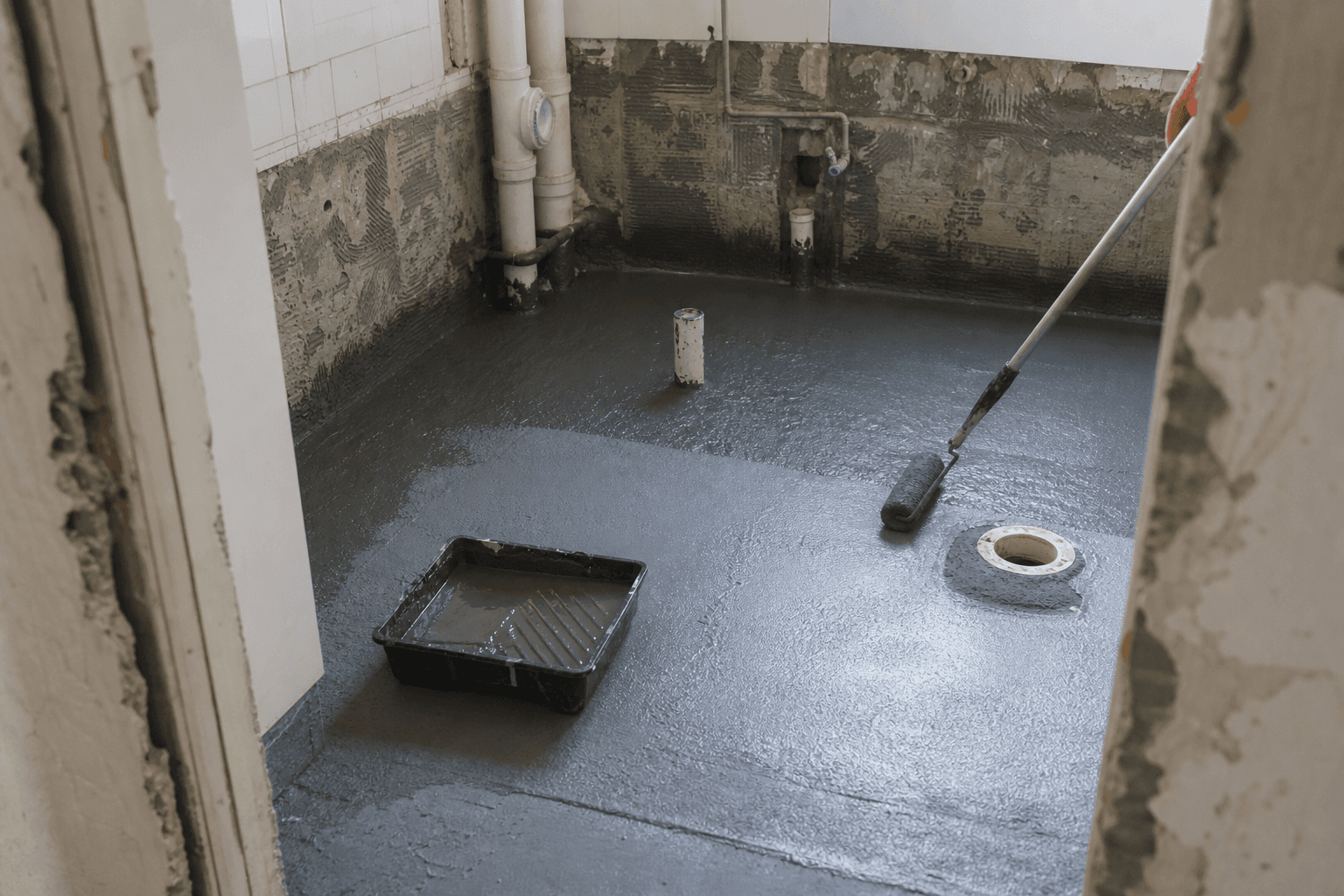
Most bathroom waterproofing in Singapore uses cementitious or liquid-applied membranes built up in coats, with extra reinforcement at corners, pipe penetrations, and the floor trap. Proper detailing matters more than the brand of membrane — the junctions are where leaks almost always start.
A correct scope usually includes hacking the existing tiles and screed, surface preparation, applying the membrane up the walls to the right height, reinforcing weak points, a flood test, and then reinstating screed, tiles, and finishes. Adex handles bathroom waterproofing in Singapore and, when leaks have already spread, related water leakage repair and ceiling repair.
What drives the cost
Bathroom waterproofing cost depends on the area, whether tiles need full hacking, the condition of the screed, the number of penetrations, and how finishes are reinstated. A full hack-and-redo bathroom costs much more than a localized repair, because most of the price is in tiling, reinstatement, and labour rather than the membrane itself.
Be careful with quotes that skip the flood test or reinstate tiles immediately. Skipping the test is how a "completed" bathroom leaks again within months.
Why flood testing matters
After the membrane is applied, the floor should be flooded and left for a set period to confirm no water passes through before tiling resumes. This single step separates a real waterproofing job from a cosmetic one. Always ask whether a flood test is included and how long the water is held.
Bottom line
Good bathroom waterproofing in Singapore is invisible when done right. Pay for correct detailing at the trap, penetrations, and wall junctions, insist on a flood test before reinstatement, and treat recurring stains as a membrane problem rather than a paint problem.
Need a contractor?
Get advice for your project
Send us your property type, photos, and preferred timeline. We'll recommend the next step and prepare a clear quotation.