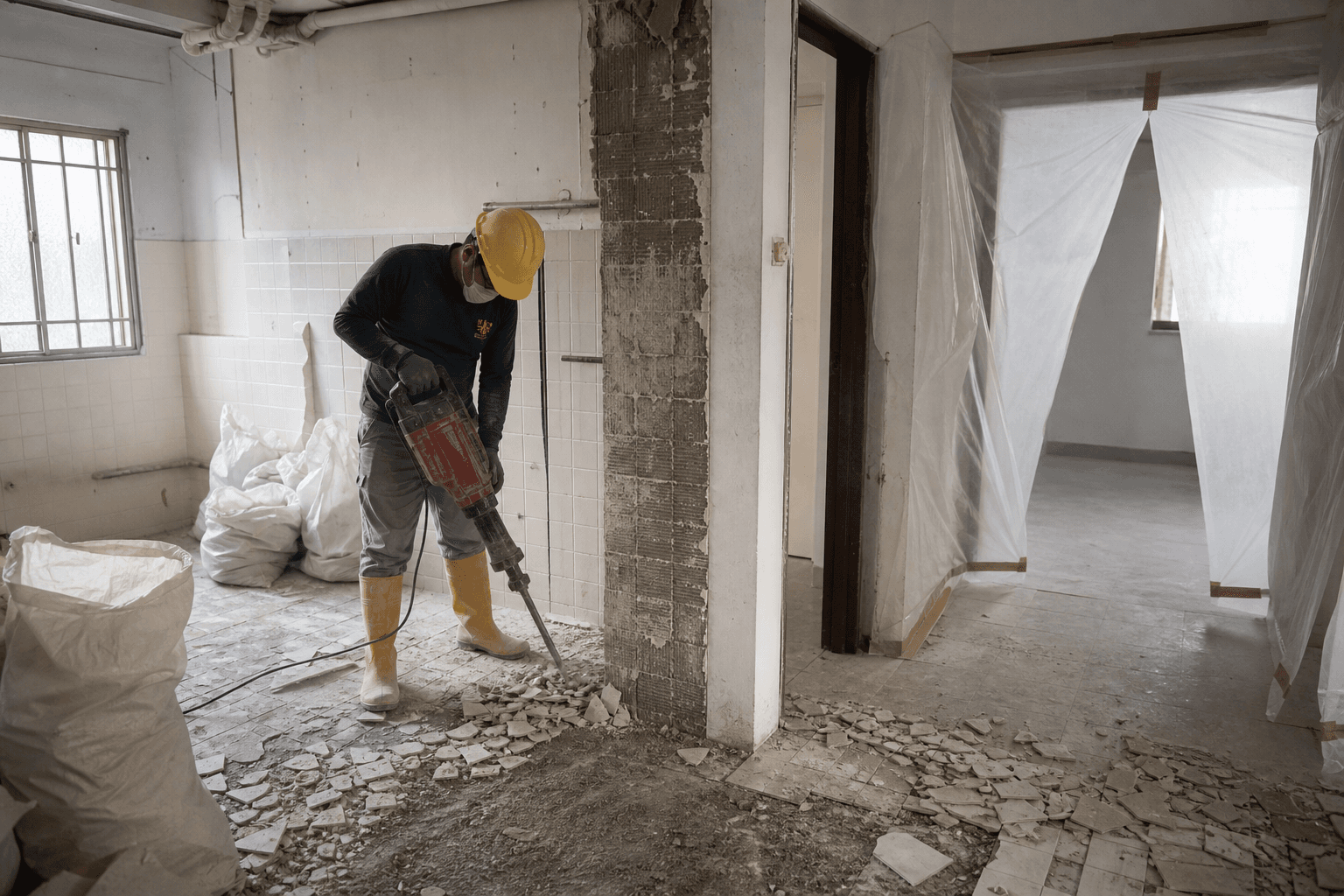
Hacking is the first messy step of most renovations, and getting it wrong can be dangerous and expensive. If you are looking into hacking and demolition Singapore, the key issues are what you are allowed to remove, how dust and debris are managed, and how hacking fits into the wider renovation.
Hacking removes existing tiles, screed, walls, and built-ins to make way for new work. The rules around it exist for safety — some walls and slabs carry load, and removing the wrong element can compromise the structure or breach regulations.
What can and cannot be hacked
Structural walls, columns, and beams generally cannot be removed or altered without proper approval, and load-bearing elements must never be hacked on assumption. In HDB flats, there are specific rules on hacking, including restrictions on certain walls and the floor slab, and some works require permits. In condos, the MCST sets rules and approval requirements. Always confirm before any wall comes down.
Non-structural partition walls, old tiles, screed, and built-ins can usually be removed, but a professional should confirm what is structural first.
Adex handles hacking and demolition in Singapore and the works that follow, such as flooring installation and bathroom waterproofing.
Dust, protection, and noise
Hacking generates heavy dust and noise. Proper jobs seal off areas, protect surfaces that stay, manage dust, and work within the approved hours set by HDB or the MCST. Protecting lifts, corridors, and finishes you intend to keep is part of a responsible scope.
Debris disposal
Demolition produces a lot of debris that must be bagged, moved, and disposed of properly. Disposal volume, access, and the floor level all affect cost and time, particularly in high-rise units where everything goes through the lift. Clarify whether disposal is included in your quote.
How hacking fits the sequence
Hacking and demolition come first, before waterproofing, services, and finishes. Getting it done cleanly — with structural elements confirmed and debris cleared — sets up every trade that follows. Rushing it or hacking the wrong wall creates problems that ripple through the whole project.
Bottom line
Hacking and demolition in Singapore must respect structure and rules first. Confirm what is load-bearing, work within HDB or MCST approvals and hours, manage dust and disposal properly, and treat clean demolition as the foundation for the rest of the renovation.
Need a contractor?
Get advice for your project
Send us your property type, photos, and preferred timeline. We'll recommend the next step and prepare a clear quotation.