Not every home needs a full strip-out. If you are weighing a partial renovation Singapore project, the question is whether targeted works can deliver most of the benefit for a fraction of the cost and disruption.
Partial renovation makes sense when the bones of the home are sound and only specific areas are dated, damaged, or no longer working for you. It is usually faster, cheaper, and less disruptive than a full renovation — provided the scope is chosen well.
When partial beats full
A partial approach works well when you want to update one or two key spaces (kitchen or bathrooms), when a recent home only needs a refresh, when budget is limited but a few areas genuinely need work, or when you plan to stay through the renovation and want to limit disruption.
A full renovation makes more sense when defects are widespread, when services like wiring or plumbing are aged throughout, or when the layout itself needs to change across the whole unit.
What to prioritise
Put money first into the things that are hardest or most disruptive to redo later: wet areas and waterproofing, electrical capacity, and any structural or layout change. Cosmetic finishes like painting and built-ins are easier to phase over time, so they can wait if budget is tight.
Adex handles partial renovation in Singapore and the trades behind it, including bathroom waterproofing, carpentry, and painting services.
Scope it room by room
Define exactly what is in and out for each area. A "bathroom renovation" might mean a cosmetic refresh or a full hack-and-waterproof — those are very different jobs. Writing the scope clearly per room makes quotations comparable and prevents the project from quietly expanding into a full renovation.
Watch the boundaries
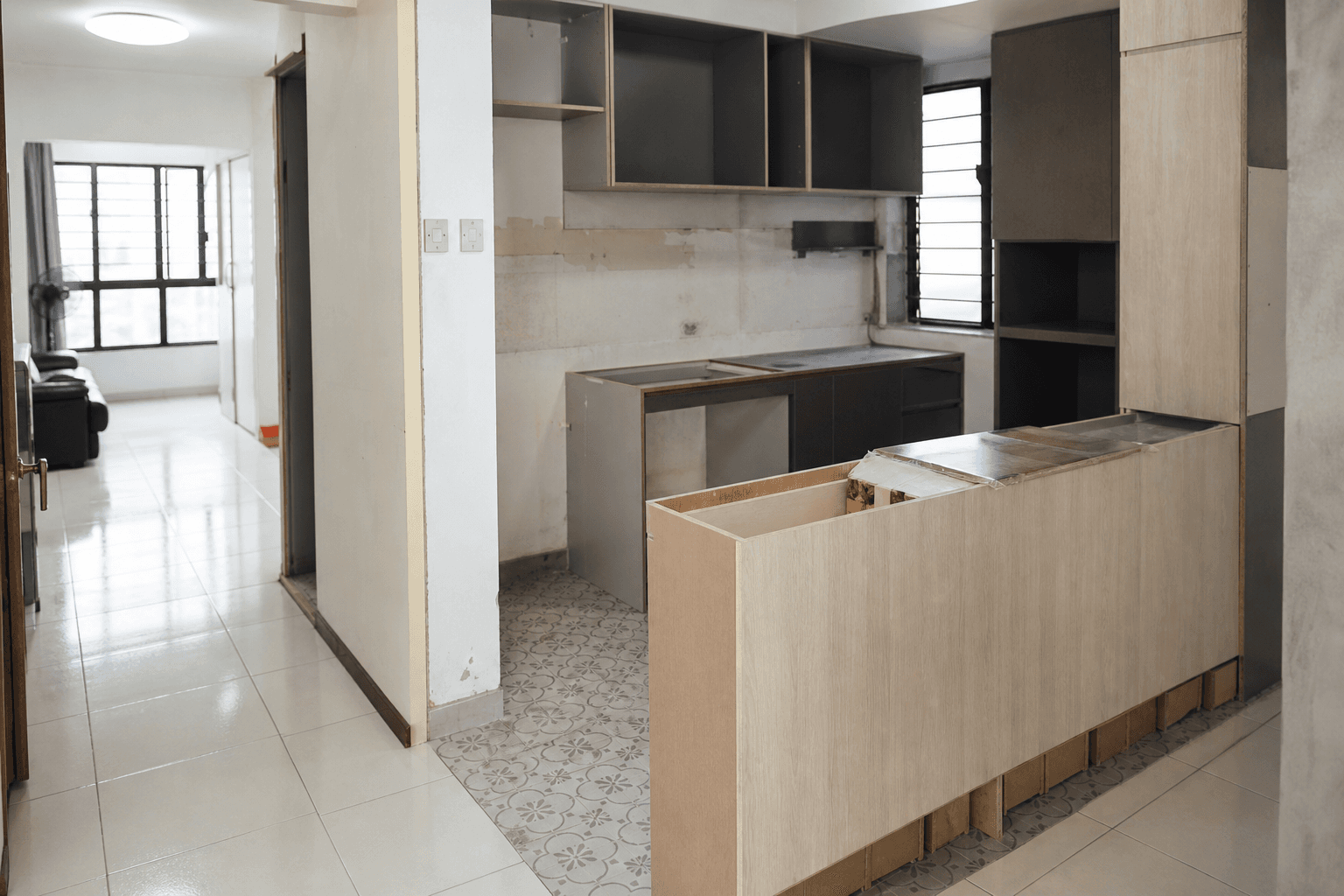
The tricky part of partial renovation is the join between new and existing — matching flooring, tying in ceilings, and blending paint. Discuss these transitions upfront so the finished result does not look patched together.
Bottom line
A well-planned partial renovation in Singapore can transform how a home feels without a full-renovation budget. Prioritise the disruptive, hard-to-redo works, scope each area precisely, and plan the transitions between new and existing finishes.
Need a contractor?
Get advice for your project
Send us your property type, photos, and preferred timeline. We'll recommend the next step and prepare a clear quotation.