Some building defects are inconvenient. Others are urgent. If you are dealing with urgent rectification Singapore situations — active structural deterioration, falling concrete, or rapidly widening cracks — the priority is safety first, diagnosis second, and permanent repair third.
Knowing the difference between a cosmetic crack and a structural warning sign helps you act before a manageable repair becomes a major rectification project.
When a defect is urgent
Treat the situation as urgent if you notice concrete spalling with exposed rebar or rust staining, chunks of plaster or concrete that have fallen, cracks that widen noticeably over weeks, bowing or sagging ceilings or beams, water saturation combined with structural cracking, or vibrations or impact damage to columns and load-bearing walls.
These signs suggest the building element is losing its structural capacity — not just its surface finish.
What to do immediately
If material has fallen or the area looks unstable, keep people away from the affected zone. Do not attempt DIY structural repairs with filler or paint — that hides the problem without fixing it. Document the damage with dated photos from multiple angles. Contact a contractor experienced in structural rectification to assess the site. If the building is managed (HDB, condo MCST, commercial landlord), notify them promptly.
For active water ingress feeding the damage, arrange temporary containment if safe to do so, but leave structural assessment to professionals.
How urgent rectification differs from cosmetic repair
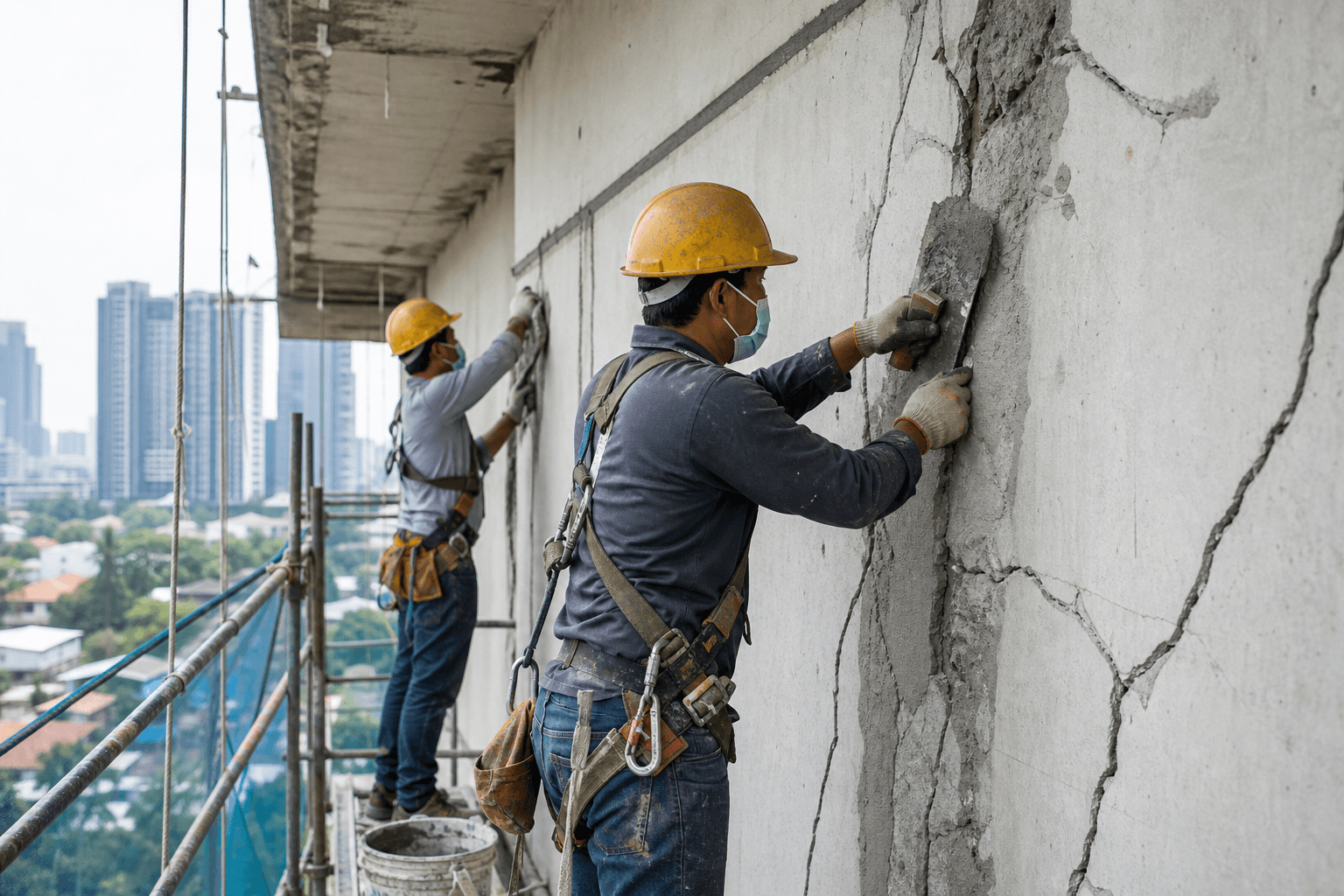
Cosmetic repair addresses surface appearance — filling hairline cracks, repainting stains, patching small plaster gaps. Urgent rectification addresses the underlying structural failure — removing loose and delaminated concrete, treating corroded reinforcement, applying structural repair mortar, and restoring protective cover to the steel.
Using cosmetic methods on structural defects wastes money and creates a false sense of security. The damage continues beneath the patch until the next piece falls.
Adex handles urgent rectification alongside structural rectification, concrete spalling repair, and wall crack repair.
Common causes in Singapore buildings
Singapore's humid climate accelerates reinforcement corrosion once water and carbonation breach concrete cover. Common triggers include long-term water leakage through roofs, bathrooms, or external walls, ageing building stock with carbonated concrete, poor original cover or workmanship, and delayed maintenance that lets minor spalling progress to exposed rebar.
Older HDB blocks, landed properties, and commercial buildings with flat roofs are frequent candidates — but spalling can appear in any building where moisture reaches the reinforcement.
What the rectification process involves
A proper urgent rectification typically follows these steps: site assessment and safety cordoning, removal of loose and delaminated material back to sound concrete, cleaning and treatment of exposed reinforcement (often with anti-rust coating), application of structural repair mortar or approved patching system, restoration of adequate cover and surface finish, and monitoring or follow-up inspection for adjacent areas.
In some cases, a Professional Engineer may need to be involved for assessment, design of repairs, or submission to BCA — especially for load-bearing elements or large affected areas.
Temporary measures vs permanent repair
Temporary props or shoring may be needed if a slab or beam shows significant distress. Temporary waterproofing can slow active water ingress while permanent rectification is planned. These are stopgaps — not substitutes for proper structural repair.
Do not delay permanent rectification because temporary measures appear to stabilise the situation. Corrosion continues even when water is reduced.
Working with your building management
In condos and commercial buildings, structural rectification may require MCST notification and approved contractor registration. In HDB estates, common-area structural issues fall under town council responsibility, while in-unit structural elements are the owner's scope.
Clarify responsibility early to avoid delays — especially when damage originates from a common-area leak affecting your unit.
Cost and timeline expectations
Urgent rectification cost depends on the extent of damage, accessibility, whether PE involvement is required, and how many areas are affected. A localised patch repair may take days; widespread spalling across multiple surfaces can take weeks.
Emergency mobilisation may cost more than scheduled works, but delaying urgent repairs typically increases the final bill as corrosion spreads and more material delaminates.
Bottom line
Urgent rectification in Singapore is about acting before structural damage escalates. Treat falling concrete, exposed rebar, and rapidly progressing cracks as safety issues — not cosmetic ones. Engage a contractor who understands structural repair methods, address the moisture source, and complete permanent rectification rather than surface patches. That protects the people in the building and the value of the property itself.
Need a contractor?
Get advice for your project
Send us your property type, photos, and preferred timeline. We'll recommend the next step and prepare a clear quotation.